


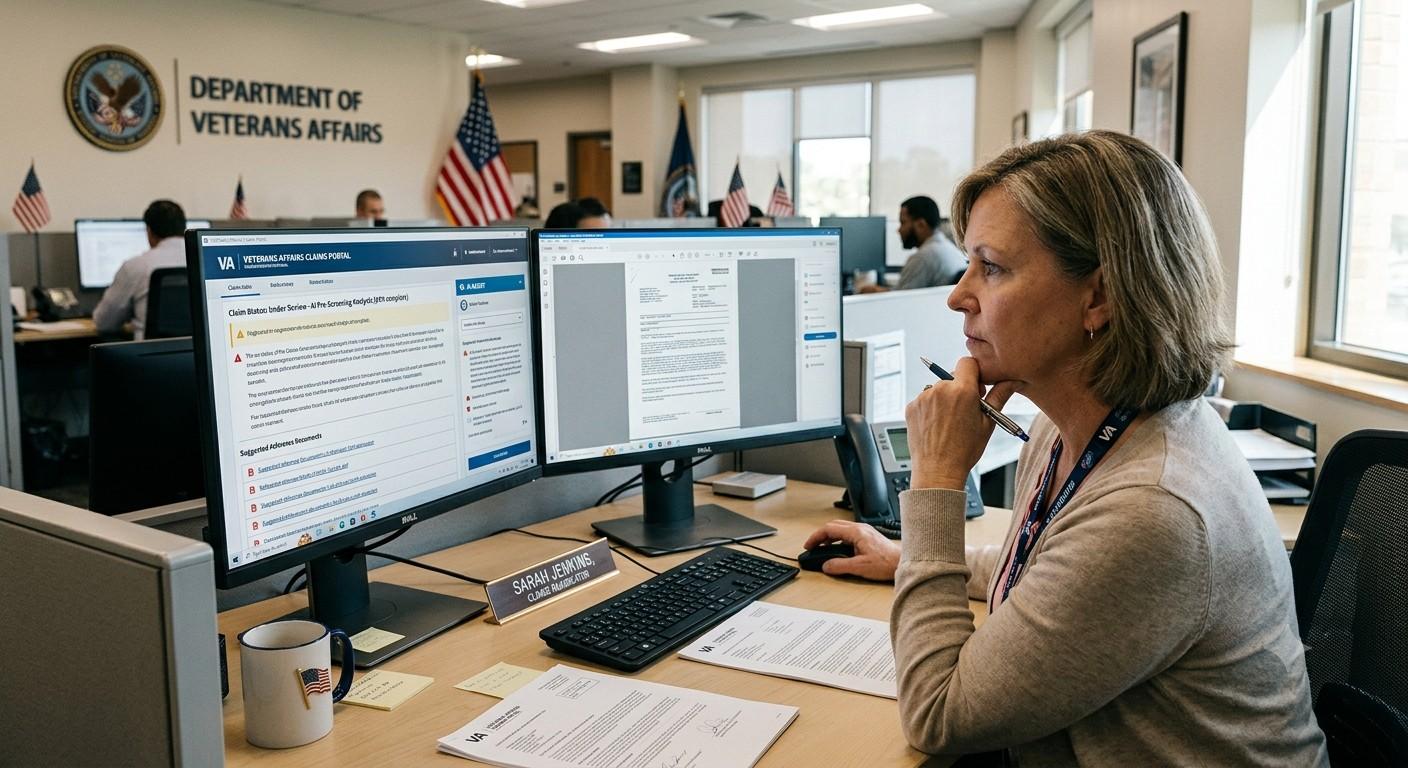
Applying for disability compensation or other benefits through the U.S. Department of Veterans Affairs (VA) can be a lengthy process involving extensive medical records, military service documentation, and legal requirements. As the number of claims continues to grow, the VA has explored artificial intelligence (AI) and other advanced technologies to improve efficiency without replacing human decision-makers.
The phrase veterans affairs ai claims review generally refers to the VA’s use of AI-assisted tools to support parts of the claims review process. Rather than allowing software to determine whether a veteran receives benefits, the current focus is on helping employees organize information, identify relevant records, and reduce administrative workloads while maintaining human oversight.
Understanding where AI fits into the system can help veterans set realistic expectations about how their claims are evaluated and what safeguards remain in place.
Technology Is Supporting Administrative Work, Not Replacing VA Decision-Makers
Artificial intelligence has become increasingly common across government agencies, particularly for managing large volumes of information. The Department of Veterans Affairs processes millions of documents every year, including:
- Military service records
- Medical examinations
- Treatment histories
- Disability questionnaires
- Supporting evidence submitted by veterans
AI tools can assist employees by sorting documents, extracting important information, identifying missing records, or directing files to the appropriate processing teams.
These functions are designed to improve workflow efficiency rather than determine whether benefits should be approved or denied. Final decisions continue to require review by trained VA personnel who apply federal law, VA regulations, and medical evidence.
Why the VA Is Exploring Artificial Intelligence
The VA has faced persistent challenges with processing times due to increasing numbers of disability claims and appeals. Veterans often submit complex cases involving years of medical documentation, making manual review both time-consuming and resource-intensive.
AI-assisted technologies may help address these challenges by:
- Organizing large electronic case files
- Highlighting potentially relevant evidence
- Detecting incomplete documentation
- Reducing repetitive administrative tasks
- Supporting faster movement of claims through early processing stages
The objective is not to automate benefits decisions but to help employees spend more time evaluating evidence instead of performing routine paperwork.
Human Judgment Remains Central to Disability Claim Decisions
A common misconception is that artificial intelligence independently decides disability ratings or benefit eligibility. Current VA policy emphasizes that important decisions affecting veterans continue to require human review.
Claims specialists consider numerous factors, including:
- Medical evidence
- Service connection requirements
- Applicable laws and regulations
- Compensation and Pension (C&P) examination findings
- Supporting statements from veterans and witnesses
AI may assist by presenting information more efficiently, but qualified reviewers remain responsible for interpreting evidence and making final determinations.
This distinction is important because disability evaluations often require nuanced judgment that cannot be reduced to simple automated rules.
Data Quality Has a Direct Impact on AI-Assisted Reviews
Artificial intelligence is only as reliable as the information it receives. Veterans with organized, complete, and accurate documentation generally make it easier for both automated systems and human reviewers to understand their claims.
Helpful documentation may include:
- Complete medical records
- Accurate service treatment records
- Private physician reports
- Diagnostic test results
- Clearly written personal statements
- Supporting lay evidence
Missing or inconsistent information can slow processing regardless of whether AI-assisted tools are involved.
Protecting Fairness and Privacy During AI Implementation
Because disability claims involve sensitive personal and medical information, privacy protections remain a major concern whenever AI technologies are introduced.
Government agencies are expected to follow strict standards governing:
- Data security
- Personally identifiable information
- Medical record confidentiality
- Transparency
- Human oversight
- Accountability
The VA must also ensure that any AI-supported process complies with federal privacy laws and established ethical guidelines for government use of artificial intelligence.
Another important consideration is reducing algorithmic bias. AI systems require continuous testing to ensure they do not unintentionally disadvantage veterans based on incomplete or unrepresentative training data.
How Veterans Can Strengthen Their Claims Regardless of Technology
Whether a claim passes through traditional workflows or AI-assisted administrative systems, the strongest claims are still built on clear evidence.
Veterans can improve their submissions by:
- Filing complete applications.
- Including all relevant medical documentation.
- Responding promptly to VA requests.
- Attending scheduled medical examinations.
- Keeping copies of submitted records.
- Reporting changes in contact information.
- Seeking accredited assistance when needed.
These practical steps remain valuable regardless of technological changes within the claims process.
AI May Continue Expanding Into Administrative Support
Artificial intelligence capabilities continue to evolve, and government agencies regularly evaluate new ways to improve efficiency.
Potential future applications could include:
- Faster document classification
- Improved records matching
- Automated identification of duplicate documents
- Enhanced search across electronic case files
- Better workload management for claims processors
Even if these technologies become more sophisticated, decisions involving disability compensation, appeals, and legal interpretation are expected to continue requiring meaningful human involvement because of their significant impact on veterans’ lives.
Understanding Common Misconceptions
Public discussions about AI sometimes create unrealistic expectations about what technology can accomplish within government benefits systems.
Several misconceptions deserve clarification:
AI does not automatically approve or deny disability benefits.
Current claims decisions remain the responsibility of trained VA personnel.
Faster processing does not guarantee faster approval.
Administrative efficiency may reduce delays, but each claim still requires evidence-based evaluation.
AI cannot replace medical examinations.
Medical professionals continue to provide clinical assessments that support disability evaluations.
Appeals remain available.
Veterans who disagree with a decision retain the same appeal rights regardless of whether AI-assisted administrative tools were used during processing.
Conclusion
The veterans affairs ai claims review process reflects a broader effort to modernize government services while preserving fairness and accountability. Rather than replacing experienced claims reviewers, AI is primarily being introduced to handle repetitive administrative tasks, organize records, and improve efficiency across the disability claims system.
For veterans, the most important factors remain unchanged: submitting complete evidence, responding to VA requests promptly, and understanding that final benefit decisions continue to rely on human judgment guided by law and medical documentation. As AI technology develops, transparency, privacy, and meaningful human oversight will remain essential to maintaining trust in the claims process.
FAQs
Does the VA use AI to determine disability ratings?
No. Disability ratings are determined by qualified VA personnel who evaluate medical evidence, applicable laws, and examination results.
Can AI make the claims process faster?
AI may help reduce administrative delays by organizing records and supporting document management, but processing times still depend on the complexity of each claim.
Will veterans know if AI was used during claim processing?
The use of AI generally supports internal administrative functions rather than replacing official decision-making. Policies regarding transparency may continue to evolve as AI adoption expands.
Can AI review medical records more quickly than humans?
AI can rapidly organize and search documents, but interpreting medical evidence for benefit decisions still requires trained professionals.
Does AI affect veterans’ appeal rights?
No. Veterans retain the same rights to request higher-level review, submit supplemental claims, or appeal eligible decisions through established VA procedures.
Is personal information protected when AI is used?
The VA is required to follow federal privacy and security standards when handling veterans’ personal and medical information, including any systems that incorporate AI.
Should veterans submit additional evidence if AI is involved?
Yes. Complete and accurate documentation remains one of the most important factors in supporting a disability claim, regardless of the technology used during administrative review.
