


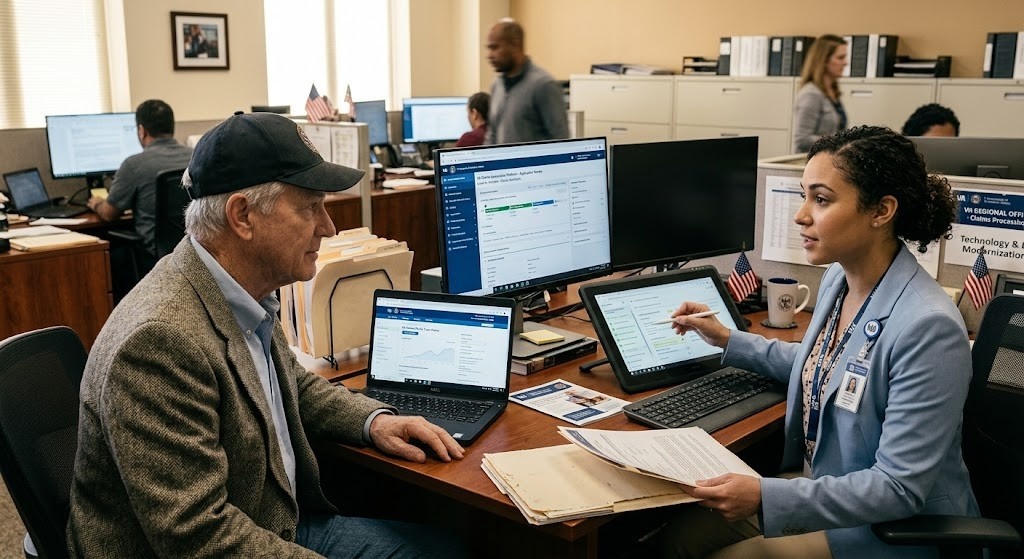
Veterans applying for disability compensation often face lengthy processing times, complex documentation requirements, and multiple review stages. To improve efficiency, the U.S. Department of Veterans Affairs (VA) has increasingly adopted VA claims automation to streamline administrative tasks while maintaining human oversight for important decisions.
Automation is not designed to replace claims processors or medical professionals. Instead, it helps organize information, identify missing documents, route claims more efficiently, and reduce repetitive manual work. Understanding how these automated systems function gives veterans a clearer picture of what happens after a claim is submitted and why some claims move faster than others.
The Growing Need for Automated Claims Processing
The VA manages millions of benefit claims every year. As the veteran population evolves and legislation expands eligibility for various conditions, the volume and complexity of claims continue to increase.
Traditional manual processing can create challenges such as:
- High administrative workloads
- Longer wait times
- Repeated data entry
- Difficulty managing large medical records
- Increased risk of clerical errors
Automation addresses many of these operational challenges by assisting employees with routine tasks while allowing specialists to focus on evaluating evidence and making benefit determinations.
Where Automation Fits Within the Claims Workflow
Automation supports multiple stages of the claims lifecycle rather than handling the entire process independently.
Digital Intake
When a veteran submits a claim electronically, automated systems can:
- Capture application data
- Verify required fields
- Identify incomplete submissions
- Organize uploaded documents
- Route files to the appropriate processing teams
This reduces delays caused by missing or improperly formatted information.
Evidence Organization
Disability claims often include:
- Service treatment records
- VA medical records
- Private medical evidence
- Military personnel files
- Supporting statements
Automation helps categorize and index these documents so claims processors can locate relevant information more efficiently.
Case Routing
Rather than assigning claims manually, automated workflows can prioritize cases based on predefined rules such as:
- Claim type
- Required examinations
- Available evidence
- Special processing programs
Proper routing helps distribute workloads across processing centers.
Technologies That Power VA Claims Automation
Modern claims automation relies on several complementary technologies rather than a single software platform.
Artificial Intelligence
Artificial intelligence assists by recognizing patterns within large document collections. It can identify relevant medical terminology, organize records, and support document classification.
Importantly, AI is generally used to assist administrative work rather than make final eligibility decisions.
Optical Character Recognition (OCR)
Many historical records exist only as scanned images.
OCR converts scanned pages into searchable digital text, allowing systems to locate information much faster than manual review.
Machine Learning
Machine learning models improve document sorting by learning from previously processed claims.
As more records are reviewed, these systems become better at identifying document categories and extracting structured information.
Workflow Automation
Workflow software automatically moves claims between departments based on completed tasks, reducing unnecessary administrative delays.
Administrative Tasks Commonly Automated
Several repetitive processes are well-suited for automation because they follow consistent rules.
Examples include:
- Document indexing
- Duplicate record detection
- Data validation
- File transfers
- Status tracking
- Notification generation
- Internal task assignments
- Scheduling workflow triggers
Automating these functions allows employees to spend more time reviewing evidence instead of performing repetitive clerical work.
Human Review Remains Essential
Despite increasing automation, many important decisions still require trained personnel.
Claims processors continue to evaluate:
- Medical evidence
- Service connection
- Disability severity
- Applicable regulations
- Supporting documentation
- Rating criteria
Medical examinations, legal interpretation, and final disability ratings involve professional judgment that automated systems cannot fully replace.
Automation supports these professionals rather than acting independently.
How Automation Can Improve the Veteran Experience
While automation primarily benefits internal operations, veterans may notice several improvements throughout the claims process.
Faster Initial Processing
Electronic intake reduces delays associated with paper forms and manual data entry.
Better Document Tracking
Digital systems can more accurately record when evidence is received and whether additional documentation is needed.
Reduced Administrative Errors
Automatic validation helps identify missing signatures, incomplete fields, or duplicate submissions before they create processing delays.
More Consistent Workflows
Standardized automated procedures help ensure claims move through required processing stages in a consistent manner.
Challenges That Automation Cannot Eliminate
Automation improves efficiency but does not solve every challenge associated with disability claims.
Several factors still affect processing time, including:
- Complex medical conditions
- Multiple claimed disabilities
- Requests for additional evidence
- Scheduling compensation and pension examinations
- Appeals and supplemental claims
- Legal policy updates
Claims requiring extensive medical review or specialized expertise often continue to take longer regardless of automated support.
Data Security and Privacy Considerations
Veterans submit highly sensitive personal and medical information during the claims process.
Automated systems handling this data must comply with federal security standards designed to protect confidential records.
Key security practices typically include:
- User authentication
- Encrypted data storage
- Controlled access permissions
- Activity logging
- Continuous monitoring
- Regular security assessments
Protecting veterans’ information remains a critical component of any automated claims environment.
Future Developments in VA Claims Automation
Automation capabilities continue to evolve as digital technologies mature.
Future improvements may include:
- More accurate document classification
- Enhanced record integration across government systems
- Improved natural language processing for medical records
- Better workload forecasting
- Faster evidence retrieval
- More personalized claim status updates
Even as automation advances, transparency and human oversight will remain essential to maintaining fairness throughout the claims process.
How Veterans Can Help Automated Systems Work Effectively
Applicants can improve processing efficiency by submitting complete and organized claims.
Helpful practices include:
- Upload clear, legible documents.
- Use official electronic filing systems whenever possible.
- Include all requested medical evidence.
- Respond promptly to requests for additional information.
- Keep personal contact information up to date.
- Review submissions carefully before sending them.
Well-organized applications reduce the likelihood of administrative delays and allow automated systems to process information more efficiently.
Conclusion
VA claims automation represents an ongoing effort to modernize the administration of veterans’ benefits without replacing the human judgment required for disability decisions. By automating document management, workflow routing, data validation, and other repetitive tasks, the VA can improve operational efficiency while allowing claims professionals to focus on evaluating evidence and applying complex regulations.
Although automation cannot eliminate every delay or guarantee faster decisions in every case, it plays an increasingly important role in creating a more consistent, organized, and responsive claims process. As technology continues to advance, veterans can expect automation to further support accurate, secure, and efficient claims administration while preserving the human oversight necessary for fair outcomes.
Frequently Asked Questions
1. Does VA claims automation decide whether a veteran receives benefits?
No. Automated systems assist with administrative tasks, while trained claims processors and medical professionals make eligibility and disability rating decisions.
2. Can automation reduce VA claim processing times?
Automation can shorten processing for routine administrative tasks, but overall timelines still depend on evidence, medical examinations, and claim complexity.
3. Is paper documentation still accepted for VA claims?
Yes. While electronic submissions are encouraged, paper documents can still be accepted and are typically digitized for processing.
4. Does automation review medical records?
Automated tools can organize and classify medical records, but qualified personnel review the medical evidence when evaluating a claim.
5. Are automated systems used for appeals as well as initial claims?
Some automation supports administrative tasks for appeals, such as document management and workflow routing, but appeals continue to require substantial human review.
6. How does automation help prevent claim errors?
Automated validation can detect incomplete forms, duplicate records, missing fields, and document inconsistencies before they delay processing.
7. Can veterans see whether automation is being used on their claim?
Generally, no. Automation operates behind the scenes as part of the VA’s internal processing systems rather than as a visible step in the claims process.
