


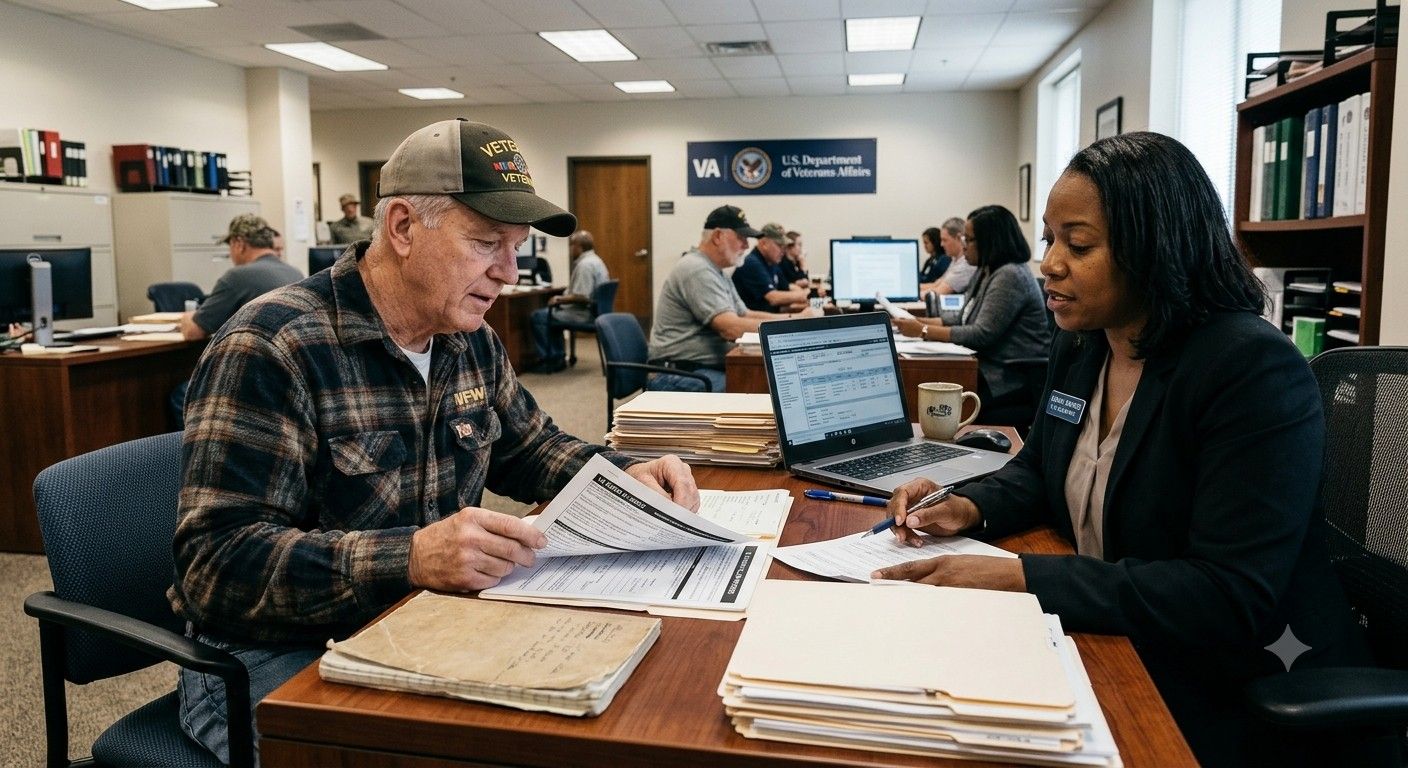
Filing for VA disability compensation can feel overwhelming, especially if you’re unfamiliar with the documentation, deadlines, and review stages involved. The VA disability claims process is designed to evaluate whether a veteran’s medical condition is connected to military service and determine the appropriate disability rating.
Understanding each stage of the process helps applicants prepare stronger claims, respond to requests promptly, and avoid unnecessary delays. Whether you’re filing an initial claim or helping someone navigate the system, knowing how the process works can make the experience more manageable.
Preparing Before You Submit a Claim
Successful claims often begin long before the application is filed. Gathering complete and accurate information reduces the likelihood of delays and requests for additional evidence.
Important documents commonly include:
- Military service records
- Medical treatment records
- Civilian healthcare documentation
- Hospital discharge summaries
- Diagnostic test results
- Supporting statements from healthcare providers
- Personal statements describing how the condition affects daily life
The stronger the evidence connecting a condition to military service, the easier it is for reviewers to evaluate the claim.
Choosing the Appropriate Claim Type
Not every application follows the same path. The VA accepts several claim types depending on a veteran’s circumstances.
Common claim categories include:
- Initial disability claims
- Supplemental claims with new evidence
- Higher-level review requests
- Appeals to the Board of Veterans’ Appeals
- Claims for increased disability ratings
- Secondary disability claims
- Claims related to presumptive service conditions
Choosing the correct filing option helps ensure the claim enters the appropriate review process.
How the VA Disability Claims Process Works
Although every case is unique, most disability claims follow a similar sequence.
Filing the Application
The process begins when the applicant submits a completed disability claim along with available supporting evidence. Missing information can slow the review, so providing complete documentation from the start is beneficial.
Applicants should carefully review every section before submission to minimize avoidable errors.
Initial Evidence Review
Once received, the claim is entered into the VA system. Claims processors examine the submitted documentation to determine whether additional evidence is needed.
During this stage, the VA may request:
- Additional medical records
- Military personnel records
- Service treatment records
- Private physician documentation
- Employment information when relevant
Prompt responses help keep the claim moving forward.
Evidence Collection
If required information is unavailable, the VA may assist in obtaining federal records or request authorization to obtain private medical records.
Applicants may also submit new evidence throughout portions of the review process.
Understanding the Compensation and Pension (C&P) Examination
Many applicants are scheduled for a Compensation and Pension (C&P) examination.
This examination is not intended to provide treatment. Instead, its purpose is to evaluate:
- Current medical condition
- Severity of symptoms
- Functional limitations
- Possible connection between military service and the claimed disability
The examiner prepares a medical report that becomes part of the evidence reviewed during the decision-making process.
Missing a scheduled examination without an acceptable reason may delay or negatively affect the claim.
How Disability Ratings Are Determined
After reviewing all available evidence, the VA assigns a disability rating if the condition is determined to be service-connected.
Ratings generally range from 0% to 100% in increments established by VA regulations.
Several factors influence the assigned rating:
- Medical diagnosis
- Frequency of symptoms
- Severity of impairment
- Functional limitations
- Impact on work and daily living
- Applicable rating criteria for the condition
The assigned percentage directly affects monthly compensation and eligibility for certain additional benefits.
Receiving the Decision Letter
Once the review is complete, applicants receive a decision explaining the outcome.
The decision typically includes:
- Whether service connection was granted
- Disability rating percentage
- Effective date
- Monthly compensation amount, if applicable
- Explanation of the evidence considered
- Reasons supporting the decision
Reading the entire decision carefully helps applicants understand the outcome and identify any next steps if they disagree.
If the Claim Is Denied or Rated Too Low
A denial does not necessarily mean the process is over.
Depending on the circumstances, applicants may pursue several review options.
Supplemental Claim
A supplemental claim allows submission of new and relevant evidence that was not previously considered.
Examples include:
- Newly obtained medical opinions
- Additional treatment records
- Expert evaluations
- Updated diagnostic testing
Higher-Level Review
This option requests a senior reviewer to examine the existing evidence without considering new documentation.
Applicants typically choose this option when they believe an error occurred during the original review.
Appeal to the Board
More complex disagreements may proceed to the Board of Veterans’ Appeals, where a Veterans Law Judge reviews the case according to the selected appeal option.
Common Reasons Claims Experience Delays
Not every delay results from problems with the application itself. Some delays occur because additional evidence must be collected or reviewed.
Frequent causes include:
- Missing medical documentation
- Incomplete application forms
- Difficulty obtaining military records
- Missed C&P examinations
- Multiple claimed conditions requiring additional review
- High claim volumes
- Requests for clarification from healthcare providers
Submitting organized documentation at the beginning often helps reduce processing time.
Practical Tips for Building a Strong Claim
Preparing carefully before filing can improve the overall quality of the submission.
Consider these best practices:
- Keep copies of every submitted document.
- Organize medical evidence chronologically.
- Submit complete treatment records whenever possible.
- Respond quickly to VA correspondence.
- Attend all scheduled examinations.
- Clearly describe how symptoms affect everyday activities.
- Review the application carefully before submission.
- Maintain updated contact information throughout the process.
These habits help minimize administrative issues that could slow the review.
Tracking Claim Progress
Applicants can monitor the progress of their disability claim throughout the review process.
Claim status updates generally reflect major milestones such as:
- Claim received
- Initial review
- Evidence gathering
- Evidence review
- Decision preparation
- Pending final approval
- Completed
Status updates provide general progress information, although processing times vary depending on claim complexity and available evidence.
Understanding Typical Processing Timelines
There is no universal processing time for disability claims. Several variables affect how long a decision takes.
Factors that commonly influence timelines include:
- Number of claimed conditions
- Complexity of medical evidence
- Availability of military records
- Need for specialist examinations
- Requests for additional documentation
- Overall claims workload
Simple claims supported by complete evidence may move more quickly than cases involving multiple medical conditions or extensive record searches.
Conclusion
The VA disability claims process involves much more than submitting an application. From gathering medical evidence and attending C&P examinations to understanding disability ratings and review options, each stage plays an important role in the final decision.
Veterans who prepare complete documentation, monitor their claim status, and respond promptly to requests are generally better positioned for a smoother review process. While timelines vary, understanding how the system works helps applicants make informed decisions and navigate each step with greater confidence.
Frequently Asked Questions
1. Can I submit additional medical evidence after filing my disability claim?
Yes. In many situations, additional evidence may be submitted while the claim is still under review, depending on the stage of the process.
2. Does every VA disability claim require a C&P examination?
No. Some claims are decided based on existing evidence, although many applicants are scheduled for a C&P examination when more medical information is needed.
3. Can multiple medical conditions be included in one disability claim?
Yes. Veterans may claim more than one service-connected condition within the same application if appropriate supporting evidence is provided.
4. Will receiving treatment after filing affect my claim?
Ongoing treatment may create additional medical records that could become relevant if the VA requests updated evidence or if future claims are filed.
5. Is a disability rating permanent once it is assigned?
Not always. Ratings may change if future evidence shows improvement, worsening of the condition, or if the VA schedules a reexamination when permitted under applicable regulations.
6. Can I file a new claim while another disability claim is still pending?
Yes. In many cases, veterans may submit claims for additional conditions while an existing claim is being processed, although doing so can affect administrative handling depending on the circumstances.
7. What happens if my service records cannot be located?
The VA may attempt to obtain records from alternative federal sources. Applicants may also submit other supporting evidence, such as medical records, unit records, or credible lay statements, when official records are unavailable.
