

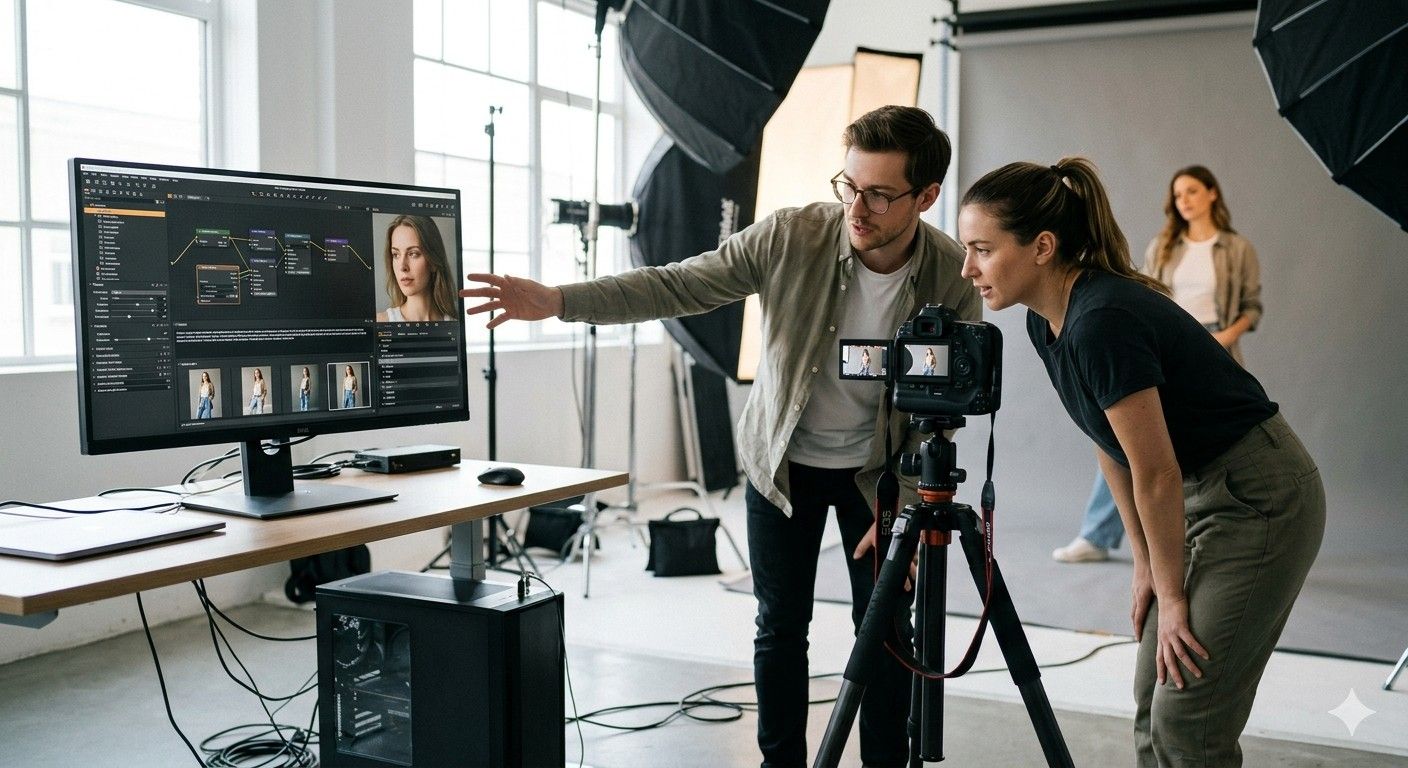
A professional photoshoot sounds simple until you calculate the actual cost. Hiring a photographer, booking a studio, arranging outfits, editing images, and coordinating schedules can easily turn a one-hour shoot into a multi-day project.
That friction explains why the artificial intelligence photoshoot market has exploded. Businesses, influencers, job seekers, and entrepreneurs are now generating studio-quality portraits, product images, and marketing visuals using AI tools in minutes rather than days.
What makes this shift interesting isn’t just the speed. It’s the fact that AI photography is solving problems that traditional photography often struggles with: scalability, consistency, and affordability.
In my experience testing multiple AI image-generation platforms, the biggest advantage isn’t replacing photographers. It’s creating high-quality visual content whenever you need it without repeating the entire production process.
Why Artificial Intelligence Photoshoots Are Growing So Quickly
AI-generated photography sits at the intersection of three major trends:
- Rising content demands
- Lower AI image-generation costs
- Improvements in realism and facial accuracy
A business that once needed four seasonal photoshoots per year can now create hundreds of variations from a single set of reference images.
This has transformed industries, including:
| Industry | AI Photoshoot Use Case |
| E-commerce | Product images and lifestyle shots |
| Real Estate | Property staging visuals |
| Personal Branding | Professional headshots |
| Fashion | Virtual model photography |
| Marketing | Ad creatives and campaign assets |
| Social Media | Content generation at scale |
The key factor driving adoption is efficiency. AI removes many logistical barriers while maintaining acceptable image quality for digital use.
How an Artificial Intelligence Photoshoot Actually Works
Many people assume AI simply creates random images.
Modern systems are much more sophisticated.
Step 1: Upload Reference Photos
Users typically upload between 10 and 30 images showing different angles, lighting conditions, and facial expressions.
The AI analyzes:
- Facial structure
- Skin tone
- Hair details
- Body proportions
- Visual patterns
Step 2: Model Training or Personalization
The platform creates a digital representation of the subject.
This stage determines how accurately future images resemble the person.
Step 3: Prompt Creation
Users provide instructions such as:
- Corporate office portrait
- Luxury fashion campaign
- Outdoor lifestyle shoot
- Magazine cover image
- Creative cinematic scene
Step 4: Image Generation
The AI combines learned characteristics with prompt instructions to create entirely new photographs.
Step 5: Refinement
Users adjust:
- Lighting
- Background
- Clothing
- Facial expressions
- Camera angles
- Image resolution
The final result often resembles a professionally edited studio image.
The Biggest Advantage Most Articles Ignore
Most discussions focus on cost savings.
That’s not the most powerful benefit.
The true advantage is visual experimentation without production risk.
Imagine planning a branding campaign.
Traditionally, testing ten creative concepts requires:
- Multiple locations
- Different wardrobes
- Additional photographers
- Extended editing
With AI, you can test all ten concepts before spending money on a real shoot.
This creates a hybrid workflow where AI becomes a planning tool rather than merely a replacement.
Marketing teams increasingly use AI-generated concepts to validate creative direction before commissioning expensive production work.
That capability is changing how visual campaigns are developed.
Artificial Intelligence Photoshoot vs Traditional Photography
Cost Comparison
| Factor | Traditional Shoot | AI Photoshoot |
| Photographer | Required | Not required |
| Studio Rental | Often needed | Not needed |
| Travel | Usually required | None |
| Editing Time | Hours or days | Minutes |
| Cost Range | $200–$5,000+ | $10–$100 |
| Scalability | Limited | Extremely high |
Quality Comparison
Traditional photography still wins in:
- Real-world authenticity
- Event coverage
- Product accuracy
- Editorial storytelling
AI excels in:
- Speed
- Volume
- Experimentation
- Budget efficiency
The choice depends on the goal rather than which technology is “better.”
Best Use Cases for AI Photoshoots
Professional Headshots
This remains one of the most popular applications.
Job seekers use AI-generated portraits for:
- LinkedIn profiles
- Corporate websites
- Speaking engagements
- Personal branding
A strong AI headshot can often outperform poorly executed traditional photography.
Social Media Content
Content creators need a constant stream of visuals.
AI helps generate:
- Lifestyle images
- Promotional graphics
- Seasonal content
- Branded imagery
Without arranging new shoots every week.
E-Commerce Marketing
Brands increasingly create:
- Product mockups
- Lifestyle scenes
- Promotional banners
- Marketplace imagery
at a fraction of traditional production costs.
Startup Branding
Many early-stage businesses lack photography budgets.
AI allows founders to build professional-looking assets before investing in larger marketing campaigns.
What Makes an AI Photoshoot Look Real?
Realism depends on several factors.
High-Quality Source Images
The AI can only learn from the material provided.
Poor reference photos often produce:
- Distorted faces
- Inconsistent features
- Unnatural lighting
Detailed Prompts
Instead of writing:
“Professional portrait”
Use:
“Professional executive portrait in soft studio lighting, 85mm lens style, neutral background, natural skin texture.”
Specificity improves output quality dramatically.
Consistent Visual Direction
Successful users define:
- Lighting style
- Color palette
- Wardrobe preferences
- Background environments
before generating images.
Consistency creates a believable visual identity.
Common Mistakes That Ruin AI Photoshoots
Uploading Similar Photos
If every reference image looks identical, the AI learns very little.
Use variation in:
- Angles
- Expressions
- Lighting conditions
Overediting Outputs
Many users add excessive filters after generation.
This often creates an artificial appearance.
Ignoring Image Rights
Not all platforms provide identical licensing terms.
Businesses should verify:
- Commercial usage rights
- Ownership policies
- Data retention practices
before publishing AI-generated images.
Unrealistic Expectations
AI images can look impressive, but they are not perfect.
Hands, jewelry, glasses, and intricate details still occasionally require correction.
Common Misconceptions About Artificial Intelligence Photoshoots
“AI Photos Always Look Fake”
This was true several years ago.
Modern systems can generate images that many viewers cannot distinguish from professional photography at first glance.
“Photographers Will Become Obsolete”
Photographers offer creativity, direction, storytelling, and human interaction.
AI handles image generation.
These are different strengths.
The future likely involves collaboration rather than replacement.
“AI Is Only Useful for Portraits”
Portraits are merely the starting point.
Businesses now generate:
- Product visuals
- Advertising assets
- Fashion concepts
- Virtual environments
using the same technology.
“AI Photography Requires Technical Skills”
Most platforms now operate through simple prompts and drag-and-drop interfaces.
The learning curve is significantly lower than that of professional photo editing software.
The Future of Artificial Intelligence Photoshoots
Several developments are already emerging.
Real-Time Generation
Users will soon generate professional images during live video sessions.
Personalized AI Models
Individuals will maintain digital visual twins capable of producing unlimited branded content.
Interactive Commercial Photography
Businesses will create customized marketing images for each customer segment.
AI and Human Collaboration
The most successful professionals will combine:
- Traditional photography
- AI image generation
- Human editing
- Strategic storytelling
into a unified workflow.
This hybrid approach is already becoming common among advanced creative teams.
Advanced FAQs
Is an artificial intelligence photoshoot suitable for LinkedIn profiles?
Yes. Many professionals use AI-generated headshots for LinkedIn, provided the images accurately represent their appearance and maintain a professional style.
Can AI create wedding or event photos?
AI can simulate wedding-style imagery, but cannot replace actual event coverage. Real moments still require photographers.
How many photos should I upload for the best results?
Most platforms perform best with 10–30 high-quality images featuring multiple angles, expressions, and lighting conditions.
Are AI-generated photos legally owned by the user?
Ownership depends on the platform’s licensing agreement. Always review usage rights before commercial publication.
Can businesses use AI photos for advertising?
In many cases, yes. However, organizations should verify commercial licensing and local advertising regulations.
Do AI photos require editing afterward?
Sometimes. Minor adjustments involving color correction, cropping, or detail refinement can improve final results.
What industries benefit most from AI photoshoots?
Personal branding, marketing, e-commerce, real estate, fashion, and digital publishing currently see the highest adoption rates.
Actionable Next Steps
If you’re considering an artificial intelligence photoshoot, start with a clear objective.
Ask yourself:
- Do you need professional headshots?
- Are you creating marketing content at scale?
- Do you want to test creative concepts before a traditional shoot?
- Is reducing production cost a priority?
Begin with a small project and compare the results against your current photography process.
The most effective users treat AI as a productivity tool rather than a magic replacement for creative expertise.
Conclusion
Artificial intelligence photoshoots are changing how visual content is created. What once required photographers, studios, travel, and extensive editing can now be produced in minutes using AI-powered tools.
The real breakthrough isn’t just lower cost. It’s the ability to generate, test, refine, and scale visual concepts faster than traditional workflows allow.
Businesses gain flexibility. Content creators gain speed. Professionals gain access to high-quality imagery without major financial investment.
The organizations that benefit most won’t choose between AI and photography. They’ll combine both, using AI for rapid experimentation and traditional photography when authenticity and storytelling matter most.
As image-generation technology continues to improve, the question is no longer whether AI photoshoots will become mainstream. The question is how quickly individuals and businesses will adapt their creative workflows to take advantage of them.
